
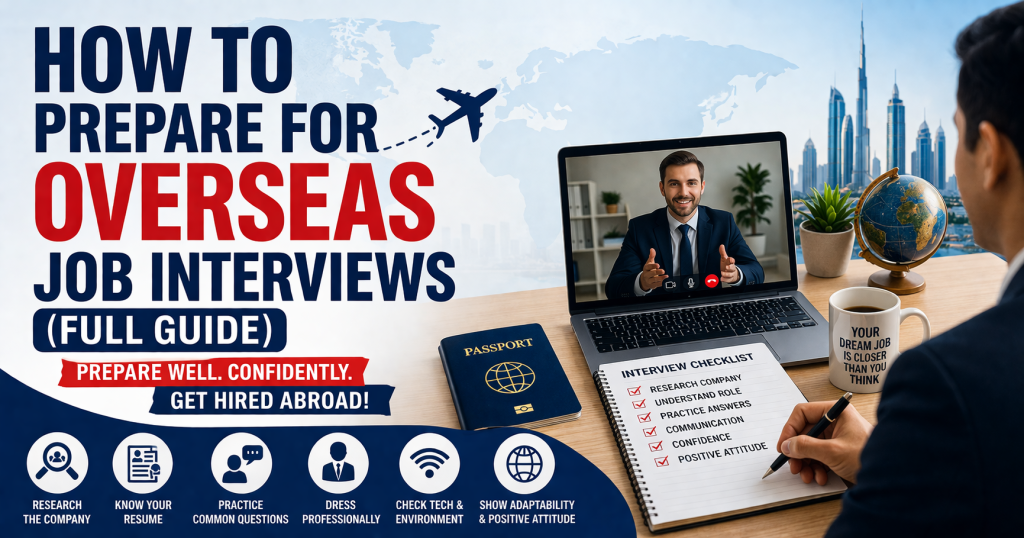
Getting shortlisted for an overseas job is a big achievement, but clearing the interview is what truly determines your success. Whether you are applying for jobs in the Gulf, Europe, or any other international destination, the interview process is often more structured, competitive, and detail-oriented compared to local hiring.
Many candidates fail at this stage not because they lack skills, but because they are not properly prepared for the expectations of international employers. Overseas interviews assess not only your technical knowledge but also your communication, attitude, adaptability, and professionalism.
This complete guide will help you understand how to prepare effectively for overseas job interviews, with practical steps and realistic insights that can significantly improve your chances of success.
Understanding How Overseas Interviews Are Different
Before preparing, it is important to understand how overseas interviews differ from local ones. Employers hiring international candidates take extra care because hiring involves visa processing, relocation costs, and legal procedures.
Key differences include:
- Greater focus on communication skills
- More structured and multi-stage interview process
- Emphasis on cultural adaptability
- Detailed background verification
Employers want to be sure that you are not only technically capable but also able to adjust to a new environment.
Types of Overseas Job Interviews
Overseas interviews can happen in different formats depending on the company and location.
Common types include:
- Telephone interviews
- Video interviews (Zoom, Teams, Google Meet)
- Face-to-face interviews (if you are already abroad)
- Panel interviews with multiple interviewers
Understanding the format in advance helps you prepare better and avoid last-minute stress.
Research the Company Thoroughly
One of the biggest mistakes candidates make is attending interviews without knowing about the company. This creates a negative impression.
Before your interview, make sure you research:
- Company background and history
- Services or products offered
- Work culture and values
- Recent news or projects
This helps you answer questions confidently and shows that you are genuinely interested in the role.
Understand the Job Role Clearly
Many candidates fail because they do not fully understand the job they applied for. Overseas employers expect you to be clear about your responsibilities.
You should:
- Read the job description carefully
- Identify key responsibilities
- Understand required skills
- Match your experience with the role
Being clear about the role helps you give precise and relevant answers.
Prepare a Strong Introduction
Your introduction is the first thing the interviewer hears, and it sets the tone for the rest of the interview.
A good introduction should include:
- Your name and background
- Your experience summary
- Your key skills
- Your career goal
Keep it short, clear, and confident. Avoid long or irrelevant details.
Practice Common Interview Questions
Preparation is key to success. Practicing common questions helps you answer confidently during the interview.
Frequently asked questions include:
- Tell me about yourself
- Why do you want to work abroad?
- Why should we hire you?
- What are your strengths and weaknesses?
- Describe your previous work experience
Try to answer these questions in a structured and natural way.
Focus on Communication Skills
Communication plays a major role in overseas interviews. Even if you have strong technical skills, poor communication can lead to rejection.
To improve:
- Speak clearly and slowly
- Use simple and professional language
- Avoid slang or informal words
- Listen carefully before answering
Confidence in communication shows professionalism and maturity.
Prepare Your Documents in Advance
Even during interviews, you may be asked to share or discuss your documents.
Keep the following ready:
- Updated CV
- Passport copy
- Certificates and experience letters
- Portfolio (if required)
Having documents ready shows that you are organized and serious about the job.
Dress Professionally
Your appearance matters, especially in video or face-to-face interviews. Dressing professionally creates a positive impression.
Simple guidelines:
- Wear formal or semi-formal attire
- Avoid bright or flashy colors
- Maintain a neat and clean look
Even in online interviews, your appearance reflects your professionalism.
Set Up Proper Interview Environment
For online interviews, your environment plays an important role.
Make sure:
- You have a stable internet connection
- Your background is clean and distraction-free
- There is good lighting
- Your camera and microphone are working properly
Technical issues can create a negative impression, so always check everything in advance.
Prepare for Technical Questions
If you are applying for a skilled job, technical questions will be part of the interview.
To prepare:
- Review your core subjects
- Understand your previous work
- Be ready to explain your projects
Do not try to memorize answers. Focus on understanding concepts so you can answer confidently.
Show Willingness to Relocate and Adapt
Overseas employers want candidates who are ready to relocate and adapt to new environments.
Be prepared to answer:
- Why are you willing to work abroad?
- How will you adjust to a new culture?
- Are you ready to work under different conditions?
Your answers should show flexibility, openness, and a positive attitude.
Be Honest and Clear
Honesty is very important in overseas interviews. Providing false information can lead to rejection later.
Always:
- Give accurate details
- Admit if you don’t know something
- Avoid exaggerating your experience
Employers value honesty more than perfect answers.
Ask Smart Questions
At the end of the interview, you may be given a chance to ask questions. This is an opportunity to show your interest.
You can ask about:
- Job responsibilities
- Work environment
- Growth opportunities
- Joining process
Avoid asking about salary too early unless the interviewer brings it up.
Handle Salary Discussions Carefully
Salary discussions are an important part of overseas interviews.
Tips for handling salary questions:
- Research market salary before the interview
- Give a realistic range
- Be open to negotiation
Do not demand unrealistic salaries, as this can reduce your chances.
Common Mistakes to Avoid
Many candidates make simple mistakes that cost them the job.
Avoid these:
- Lack of preparation
- Poor communication
- Not researching the company
- Giving unclear answers
- Showing negative attitude
Avoiding these mistakes can significantly improve your performance.
After the Interview – What You Should Do
Your job is not finished once the interview ends. Your follow-up actions also matter.
You should:
- Send a thank-you message if possible
- Stay available for further communication
- Keep your documents ready
This shows professionalism and keeps you connected with the employer.
Tips to Increase Your Success Rate
To improve your chances of clearing overseas interviews, focus on continuous improvement.
Helpful tips:
- Practice regularly
- Improve language skills
- Stay updated with industry trends
- Build confidence through mock interviews
- Learn from previous interview experiences
Consistency and preparation are the keys to success.
Final Thoughts
Preparing for overseas job interviews requires more than just technical knowledge. It involves communication, confidence, awareness, and the right mindset.
Many candidates lose opportunities not because they lack skills, but because they fail to present themselves effectively. When you prepare properly and understand what employers expect, your chances of success increase significantly.
Take every interview as a learning experience, stay patient, and keep improving. With the right preparation and approach, you can successfully clear overseas job interviews and move closer to your goal of building a career abroad.