Introduction
The United Arab Emirates has transformed itself into one of the world’s most important aviation hubs. Every day, millions of passengers and thousands of tons of cargo move through the country’s airports, supported by a vast network of aviation professionals working behind the scenes.
While pilots and cabin crew often receive the most attention, the aviation industry offers career opportunities across engineering, logistics, airport operations, safety management, procurement, customer service, air cargo, information technology, and corporate functions.
For job seekers, this creates an important opportunity. Aviation careers are no longer limited to individuals pursuing flight training. Professionals from technical, operational, business, and customer-focused backgrounds can all find rewarding career paths within the industry.
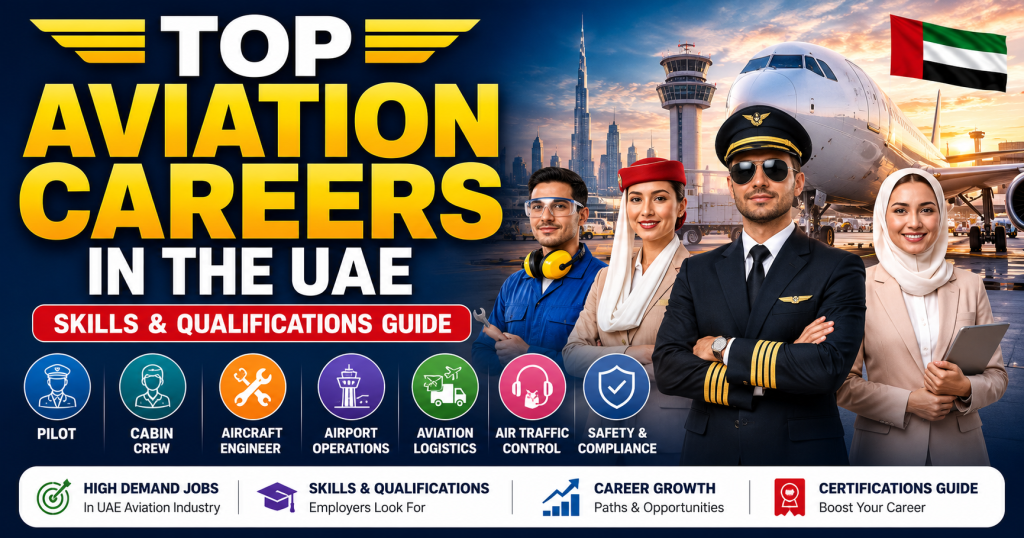
This guide explores the most sought-after aviation careers in the UAE, the qualifications employers commonly require, the skills that improve employability, and practical steps job seekers can take to build a successful long-term career in aviation.
Why the UAE Is a Global Aviation Employment Hub
Few countries have invested in aviation as aggressively as the UAE.
Several factors contribute to the sector’s continued growth:
- Strategic geographic location connecting Europe, Asia, and Africa
- World-class airport infrastructure
- Expanding airline fleets
- Strong tourism demand
- Growth in air cargo and logistics operations
- Government investment in transportation and aviation technology
- Increasing demand for skilled aviation professionals
The aviation sector also supports thousands of indirect jobs in logistics, maintenance, security, ground handling, procurement, technology, hospitality, and customer service.
For many professionals, aviation offers long-term career stability, international exposure, and opportunities to work in highly structured and professional environments.
Understanding the UAE Aviation Industry
Before exploring individual careers, it helps to understand how the industry operates.
Aviation organizations typically employ professionals across several major categories:
Flight Operations
Professionals directly involved in aircraft operations.
Examples include:
- Pilots
- Flight dispatchers
- Flight operations officers
Cabin Services
Professionals responsible for passenger safety and onboard service.
Examples include:
- Cabin crew
- Inflight supervisors
- Guest experience specialists
Technical & Engineering
Professionals responsible for aircraft maintenance and safety.
Examples include:
- Aircraft maintenance engineers
- Avionics technicians
- Quality assurance specialists
Airport Operations
Professionals responsible for maintaining efficient airport activities.
Examples include:
- Airport operations officers
- Ground operations coordinators
- Ramp supervisors
Logistics & Supply Chain
Professionals responsible for moving aircraft parts, cargo, tools, and operational materials.
Examples include:
- Logistics coordinators
- Supply chain specialists
- Air cargo professionals
Corporate Functions
Professionals supporting aviation organizations from business and administrative perspectives.
Examples include:
- Human resources specialists
- Finance professionals
- Procurement officers
- IT professionals
- Marketing specialists
1. Commercial Pilot
Commercial pilots remain among the most recognized professionals in aviation.
Their primary responsibility is the safe operation of aircraft while ensuring compliance with aviation regulations and company procedures.
Key Responsibilities
- Conducting pre-flight checks
- Operating aircraft safely
- Monitoring weather conditions
- Communicating with air traffic control
- Managing flight systems
- Ensuring passenger safety
Qualifications
Typical requirements include:
- Commercial Pilot License (CPL)
- Airline Transport Pilot License progression
- Medical certification
- Flight hours requirements
- English language proficiency
Essential Skills
- Leadership
- Decision-making
- Communication
- Situational awareness
- Problem solving
Pilots must continuously update their qualifications through recurrent training and regulatory assessments.
2. Cabin Crew
Cabin crew members play a critical role in both passenger safety and customer service.
Although many people associate the role primarily with travel opportunities, airlines place significant emphasis on safety training and emergency preparedness.
Key Responsibilities
- Conducting safety demonstrations
- Assisting passengers
- Managing onboard services
- Responding to emergencies
- Maintaining cabin security
Qualifications
Employers often seek candidates who demonstrate:
- Strong communication skills
- Customer service experience
- Professional appearance
- Medical fitness
- English language proficiency
Valuable Skills
- Cultural awareness
- Conflict resolution
- Teamwork
- Emotional intelligence
- Customer service excellence
3. Aircraft Maintenance Engineer (AME)
Aircraft Maintenance Engineers help ensure aircraft remain safe and airworthy.
This career path is highly technical and offers strong long-term demand across the aviation industry.
Responsibilities
- Aircraft inspections
- Troubleshooting technical issues
- Performing maintenance tasks
- Replacing aircraft components
- Ensuring regulatory compliance
Qualifications
Common requirements include:
- Aviation engineering education
- Regulatory licensing
- Technical certifications
- Practical maintenance experience
Essential Skills
- Technical problem solving
- Attention to detail
- Safety awareness
- Documentation accuracy
Candidates with strong technical backgrounds often find this career particularly rewarding because of its specialized nature and career progression opportunities.
4. Aviation Logistics Specialist
Modern airlines depend on efficient logistics operations to keep aircraft flying.
Aviation logistics professionals coordinate the movement of aircraft parts, tools, consumables, and critical operational materials.
Responsibilities
- Shipment coordination
- Freight forwarding
- Customs documentation
- Inventory tracking
- Supplier coordination
Skills Employers Value
- Logistics knowledge
- Documentation management
- Supply chain understanding
- ERP software proficiency
- Communication skills
With airline fleets expanding across the region, logistics professionals continue to play an increasingly important role.
5. Airport Operations Officer
Airport Operations Officers help ensure airports function safely and efficiently.
Responsibilities
- Airside inspections
- Safety monitoring
- Operational reporting
- Incident coordination
- Stakeholder communication
Essential Skills
- Leadership
- Communication
- Risk management
- Operational awareness
- Decision making
This role often provides valuable exposure to multiple areas of airport management.
6. Air Traffic Controller
Air Traffic Controllers are responsible for managing aircraft movements and maintaining safe separation between flights.
Responsibilities
- Monitoring aircraft movements
- Providing navigation instructions
- Managing airspace traffic
- Coordinating with pilots
Required Skills
- Concentration
- Multitasking
- Situational awareness
- Communication
- Rapid decision making
This career demands a high level of professionalism and ongoing training.
7. Aviation Safety Specialist
Safety professionals help organizations identify and manage operational risks.
Responsibilities
- Safety audits
- Incident investigations
- Risk assessments
- Compliance monitoring
Skills
- Analytical thinking
- Reporting
- Regulatory knowledge
- Attention to detail
As aviation regulations continue evolving, safety specialists remain highly valued across the industry.
8. Aviation Procurement Specialist
Procurement teams support airline operations by sourcing goods and services required for daily activities.
Responsibilities
- Vendor management
- Contract administration
- Purchasing activities
- Cost analysis
Valuable Skills
- Negotiation
- Financial awareness
- Communication
- Supplier management
9. Air Cargo Professional
The UAE’s position as a global trade hub creates strong demand for air cargo specialists.
Responsibilities
- Cargo documentation
- Shipment coordination
- Customs support
- Freight operations
Skills
- Organization
- Documentation accuracy
- Time management
- Customer communication
10. Aviation Customer Service Agent
Customer service professionals often serve as the first point of contact between passengers and airlines.
Responsibilities
- Check-in assistance
- Boarding support
- Passenger inquiries
- Travel documentation verification
Skills
- Communication
- Problem solving
- Patience
- Customer service
Most In-Demand Aviation Skills in 2026
Regardless of specialization, employers consistently value:
Technical Skills
- Aviation regulations knowledge
- Microsoft Office proficiency
- ERP systems
- Safety management principles
Soft Skills
- Communication
- Teamwork
- Adaptability
- Time management
- Problem solving
Professional Traits
- Reliability
- Attention to detail
- Professionalism
- Continuous learning mindset
How to Start an Aviation Career in the UAE
Step 1: Choose a Career Path
Identify whether you prefer technical, operational, customer-facing, or business-focused roles.
Step 2: Gain Relevant Qualifications
Research certifications and educational requirements specific to your chosen profession.
Step 3: Build Industry Knowledge
Stay informed about aviation trends, regulations, and employer expectations.
Step 4: Create an ATS-Friendly Resume
Highlight relevant skills, certifications, achievements, and industry experience.
Step 5: Apply Through Official Employer Channels
Focus on airline, airport, aviation service provider, and government aviation authority career portals.
Frequently Asked Questions
Which aviation career is best for long-term growth?
Growth potential depends on qualifications, experience, and specialization. Engineering, logistics, safety management, and leadership roles often provide strong long-term career opportunities.
Do I need a degree to work in aviation?
Not necessarily. Requirements vary significantly depending on the role. Some positions prioritize certifications, licenses, or practical experience.
Is aviation a good industry for fresh graduates?
Yes. Many aviation organizations offer entry-level opportunities across operations, logistics, customer service, administration, and technical departments.
Are aviation careers only available at airlines?
No. Airports, maintenance organizations, cargo operators, regulators, technology providers, and aviation service companies also hire aviation professionals.
Which aviation skills are most valuable today?
Communication, safety awareness, problem solving, technical proficiency, and adaptability remain among the most sought-after skills.
Final Thoughts
Aviation remains one of the most dynamic industries in the UAE. While many people focus on pilots and cabin crew, the sector offers a diverse range of opportunities across engineering, logistics, airport operations, safety management, cargo services, procurement, and customer service.
Professionals who invest in relevant qualifications, continuously develop their skills, and stay informed about industry trends often position themselves well for long-term success. Whether you are entering the workforce for the first time or considering a career transition, the UAE aviation sector offers numerous pathways for professional growth and development.
⚠️ Disclaimer: Alkareer is an independent job information platform and is not associated with the recruiting company unless explicitly stated. Job details are gathered from publicly available sources and may change without notice. Applicants should verify all information directly through the employer’s official careers page before applying. Alkareer does not charge any fees for job information, applications, interviews, or recruitment services.