
The Future of Administrative Careers in UAE, Saudi Arabia, Qatar, Kuwait, Oman, and Bahrain
Artificial Intelligence (AI) is no longer a futuristic concept. Across the Gulf region, organizations are increasingly using AI-powered tools to streamline operations, improve productivity, and reduce repetitive administrative work. From multinational corporations in Dubai to government entities in Riyadh and large construction companies in Doha, AI is gradually becoming part of everyday office operations.
This shift has created both opportunities and concerns for administrative professionals. Many job seekers wonder whether AI will replace administrative jobs entirely or create new career opportunities.
The reality is more nuanced. AI is changing administrative roles, but it is not eliminating the need for skilled professionals. Instead, it is transforming the way administrative work is performed and increasing demand for professionals who can work alongside technology.
In this article, we explore how AI is changing administrative jobs in the Gulf region, which tasks are being automated, the skills employers are now seeking, and how administrative professionals can prepare for the future.
Understanding Administrative Jobs in the Gulf
Administrative professionals play a vital role in ensuring smooth office operations. Common positions include:
- Administrative Assistant
- Office Administrator
- Admin Executive
- Executive Secretary
- Receptionist
- HR Administrator
- Document Controller
- Personal Assistant
- Office Coordinator
These professionals handle scheduling, communication, document management, reporting, record keeping, and coordination between departments.
Traditionally, many of these tasks involved significant manual effort. Today, AI is helping automate several routine processes.
Why Gulf Countries Are Adopting AI Rapidly
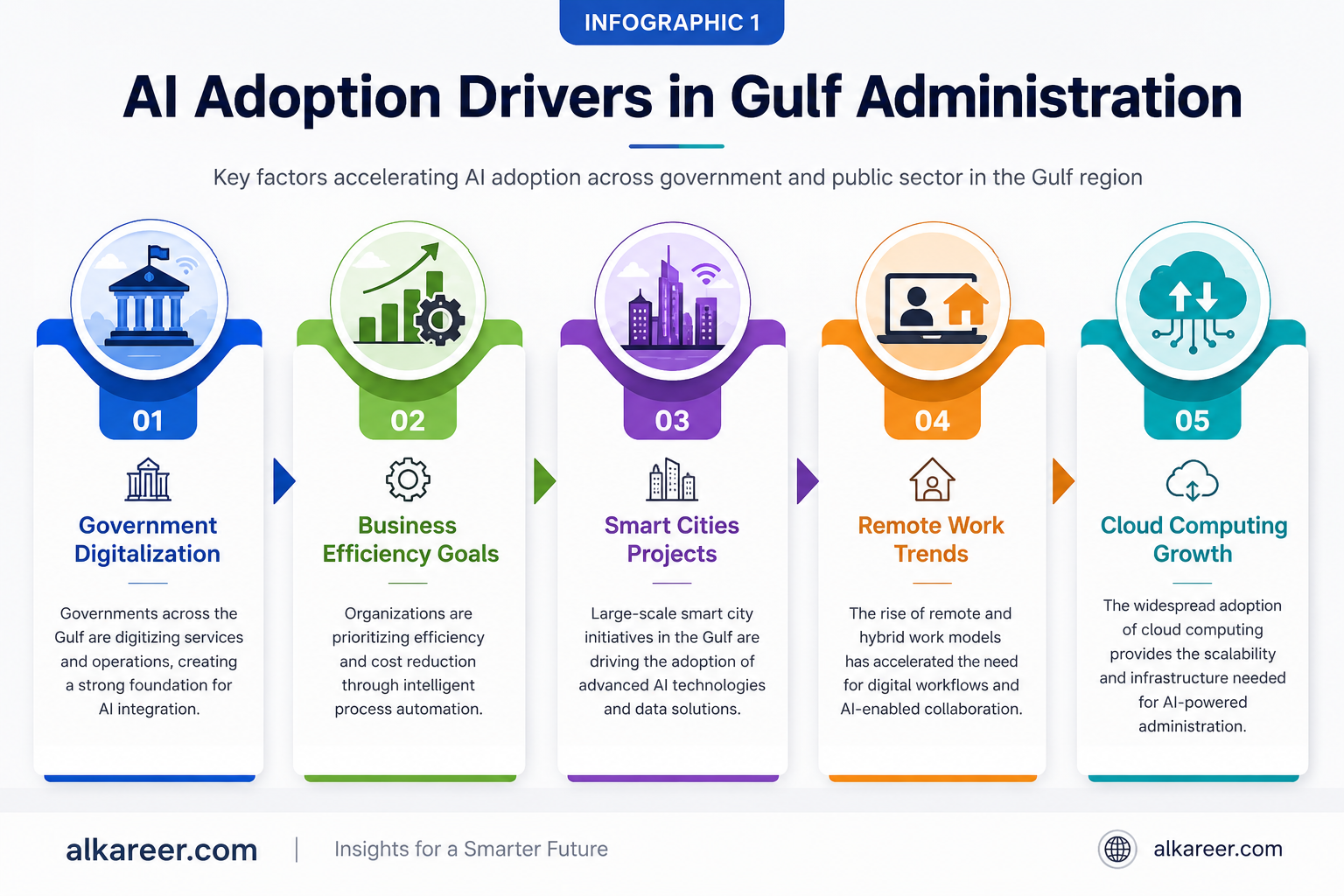
The Gulf region has become one of the fastest-growing technology markets in the world.
Several factors are driving AI adoption:
UAE’s Digital Transformation Strategy
The UAE has invested heavily in smart government initiatives and digital transformation programs. Businesses are increasingly integrating AI into customer service, administration, and operations.
Saudi Vision 2030
Saudi Arabia’s Vision 2030 initiative aims to diversify the economy and accelerate technology adoption across industries. AI plays a significant role in achieving these goals.
Smart Cities and Mega Projects
Projects such as NEOM, The Line, Lusail City, and various smart infrastructure developments rely heavily on advanced technologies including AI.
Business Efficiency
Companies continuously seek ways to improve efficiency, reduce operational costs, and improve decision-making.
Administrative departments are often among the first areas where automation can produce measurable results.
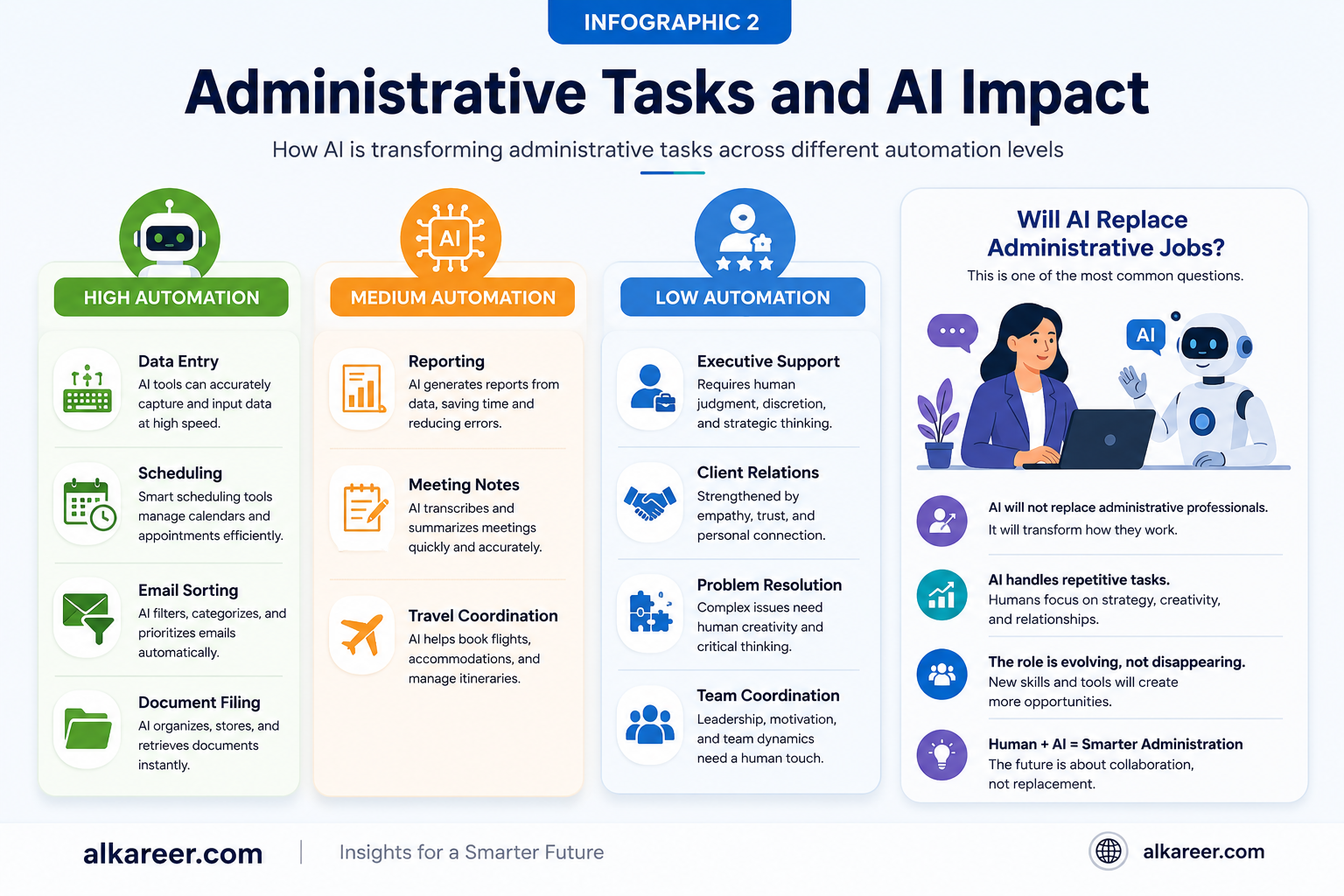
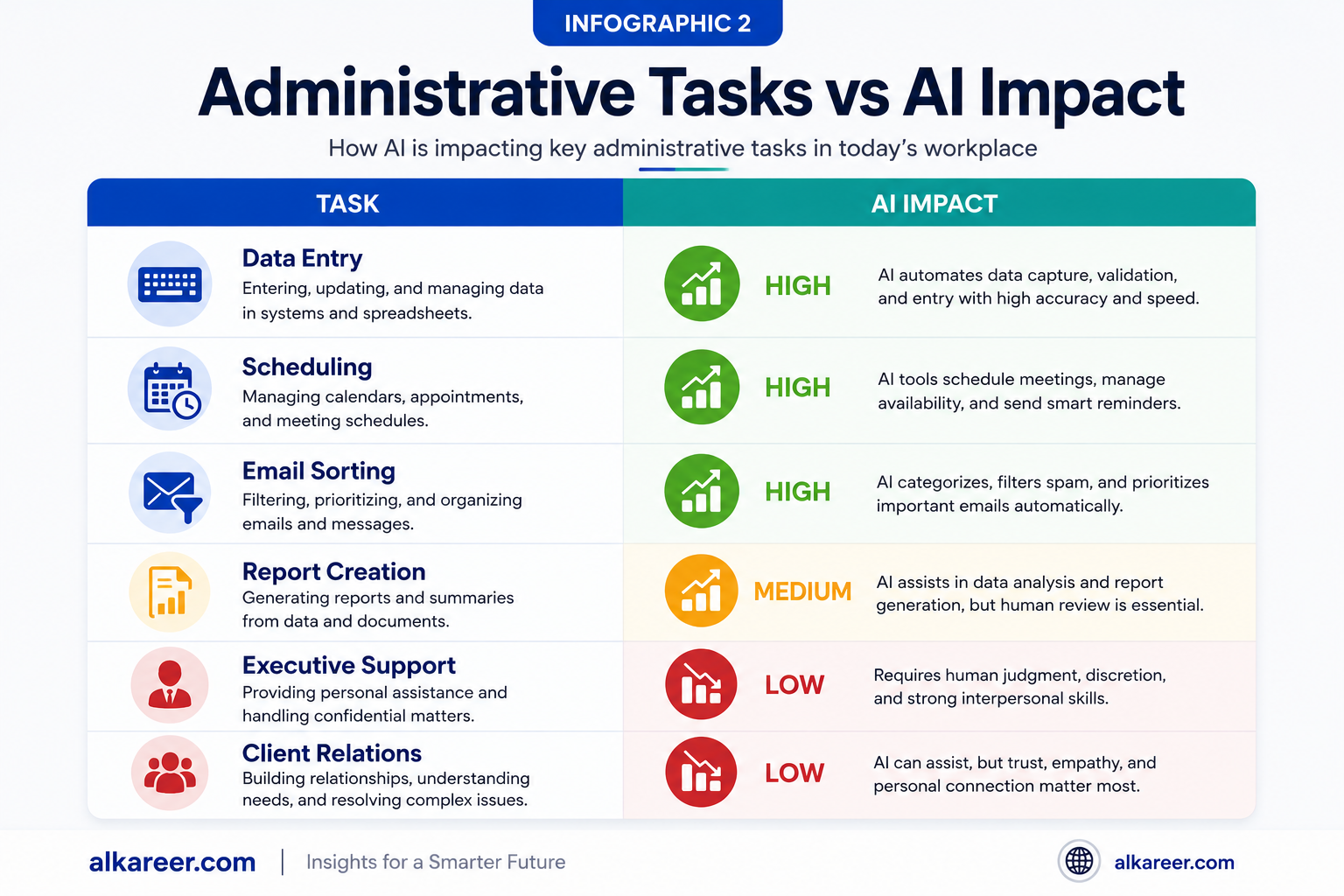
Administrative Tasks Most Affected by AI
Not every administrative responsibility is equally vulnerable to automation.
1. Scheduling and Calendar Management
AI-powered assistants can:
- Schedule meetings
- Avoid conflicts
- Send reminders
- Suggest meeting times
- Coordinate across time zones
Tasks that once required significant manual effort can now be completed in seconds.
2. Email Management
AI tools can:
- Draft responses
- Prioritize messages
- Categorize emails
- Generate summaries
This allows administrators to focus on higher-value tasks.
3. Data Entry
One of the most heavily automated areas.
AI systems can:
- Extract information from documents
- Populate databases
- Update records
- Verify information accuracy
4. Document Processing
Modern AI can:
- Scan contracts
- Extract data
- Classify files
- Organize digital records
5. Report Generation
AI-powered reporting tools can:
- Collect data
- Analyze trends
- Create visual dashboards
- Generate management reports
Tasks That Still Require Human Expertise
Despite AI’s capabilities, many administrative responsibilities remain difficult to automate.
Relationship Management
Human interaction remains essential for:
- Client communication
- Employee coordination
- Vendor negotiations
- Executive support
Problem Solving
Unexpected situations often require judgment and decision-making that AI cannot fully replicate.
Confidential Matters
Many organizations prefer human oversight for:
- Sensitive information
- HR matters
- Executive communications
- Legal documentation
Cultural Intelligence
The Gulf workplace often involves multicultural teams.
Understanding cultural nuances remains a uniquely human strength.
AI Tools Commonly Used in Gulf Offices
Administrative professionals increasingly encounter AI-powered workplace tools.
Microsoft Copilot
Used for:
- Word document creation
- Excel analysis
- PowerPoint presentations
- Meeting summaries
ChatGPT and Similar AI Assistants
Helpful for:
- Drafting emails
- Writing reports
- Creating templates
- Generating meeting notes
AI Meeting Assistants
Can:
- Record meetings
- Generate summaries
- Create action items
OCR and Document Automation Software
Used extensively in:
- Construction companies
- Logistics firms
- Government departments
HR Automation Platforms
Assist with:
- Leave management
- Employee records
- Recruitment administration
Will AI Replace Administrative Jobs?
This is one of the most common concerns among job seekers.
The answer is unlikely.
AI is expected to replace tasks rather than entire professions.
Historically, technology has transformed jobs rather than eliminating them completely.
For example:
- Computers reduced manual paperwork.
- Email reduced postal communication.
- Cloud software reduced physical filing.
Administrative professionals adapted and continued to be valuable.
The same trend is occurring with AI.
Professionals who adapt are likely to remain highly employable.
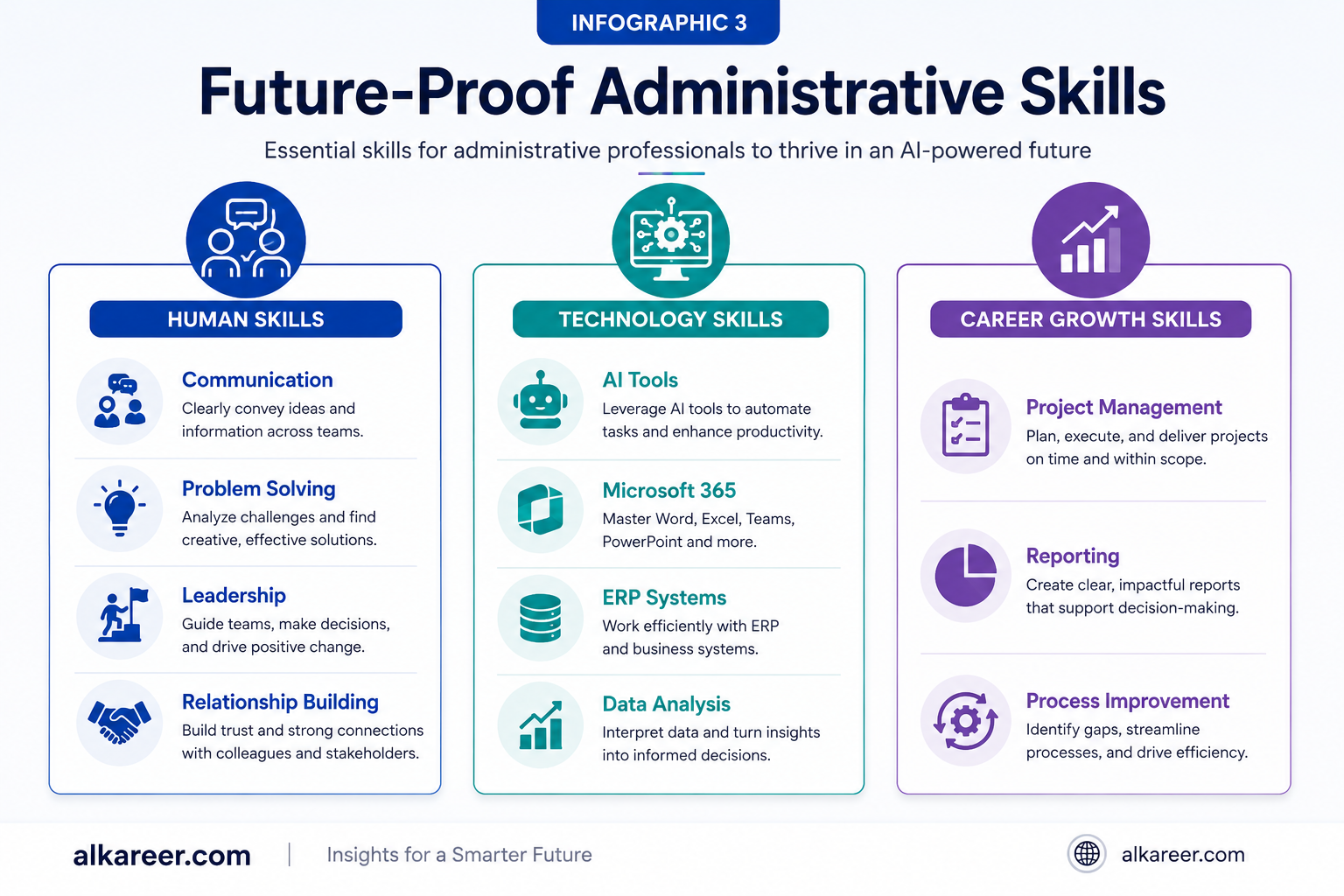
New Skills Employers Are Looking For
As AI adoption grows, Gulf employers are increasingly seeking administrative professionals with digital skills.
Digital Literacy
Understanding workplace software is now essential.
AI Tool Usage
Candidates who understand AI-assisted workflows often have an advantage.
Data Analysis
Basic reporting and analytics skills are becoming more important.
Advanced Excel
Many organizations still rely heavily on spreadsheets.
Communication Skills
Human communication remains one of the most valuable workplace skills.
Project Coordination
Organizations increasingly value professionals who can coordinate multiple stakeholders and projects.
How Administrative Roles Are Evolving
Administrative jobs are moving beyond basic clerical functions.
Traditional Role
- Filing
- Data entry
- Scheduling
- Record keeping
Modern Role
- Process coordination
- Data analysis
- Technology management
- Workflow optimization
- Executive support
This evolution often leads to better career opportunities and higher salaries.
Industries Creating New Opportunities
Several sectors in the Gulf continue to hire administrative professionals despite automation.
Construction
Mega projects require extensive administrative support.
Healthcare
Hospitals and clinics generate large amounts of documentation.
Logistics
Supply chain operations require coordination and record management.
Government
Digital transformation initiatives continue to create administrative opportunities.
Hospitality
Hotels and tourism businesses need office support professionals.
Energy Sector
Oil, gas, and renewable energy companies require skilled administrators.
Administrative Skills That Will Remain Valuable Until 2030
Job seekers should focus on developing skills that complement AI rather than compete with it.
High-Value Future Skills
- Communication
- Leadership
- Coordination
- Decision-making
- Critical thinking
- Customer service
- Stakeholder management
- Project administration
- Business writing
- Technology adaptation
These skills are difficult for AI systems to replicate.
How Job Seekers Can Prepare for the AI Era
Learn AI Tools
Familiarize yourself with:
- ChatGPT
- Microsoft Copilot
- AI meeting assistants
- Automation platforms
Improve Computer Skills
Master:
- Excel
- Word
- PowerPoint
- Outlook
Focus on Productivity
Employers value professionals who can achieve more with technology.
Build Professional Communication
Strong written and verbal communication remains critical.
Stay Updated
Technology evolves rapidly.
Continuous learning is becoming essential.
Opportunities for Freshers
AI is not only affecting experienced professionals.
Fresh graduates can benefit by learning modern administrative tools early.
Freshers who combine:
- Administrative knowledge
- Computer skills
- AI awareness
- Professional communication
may have an advantage over candidates relying solely on traditional office skills.
The Future of Administrative Jobs in UAE, Saudi Arabia, Qatar, Kuwait, Oman, and Bahrain
Over the next decade, administrative careers are expected to become more strategic.
Organizations will increasingly need professionals who can:
- Manage digital workflows
- Coordinate projects
- Analyze information
- Support leadership teams
- Work alongside AI systems
Rather than eliminating administrative careers, AI is pushing the profession toward higher-value responsibilities.
Professionals who embrace technology will likely find more opportunities than those who resist change.
Final Thoughts
Artificial Intelligence is transforming administrative jobs throughout the Gulf region. Routine tasks such as data entry, scheduling, document management, and reporting are becoming increasingly automated. However, human skills such as communication, problem-solving, relationship management, and coordination remain indispensable.
For job seekers targeting administrative careers in UAE, Saudi Arabia, Qatar, Kuwait, Oman, and Bahrain, the best strategy is not to fear AI but to learn how to use it effectively.
The future belongs to administrative professionals who combine traditional organizational abilities with modern digital and AI skills. As Gulf economies continue their digital transformation journey, those who adapt will be well-positioned for long-term career success.
For more Gulf career guides, administrative job opportunities, interview preparation tips, and industry insights, job seekers can continue exploring resources available on Alkareer.