
Introduction
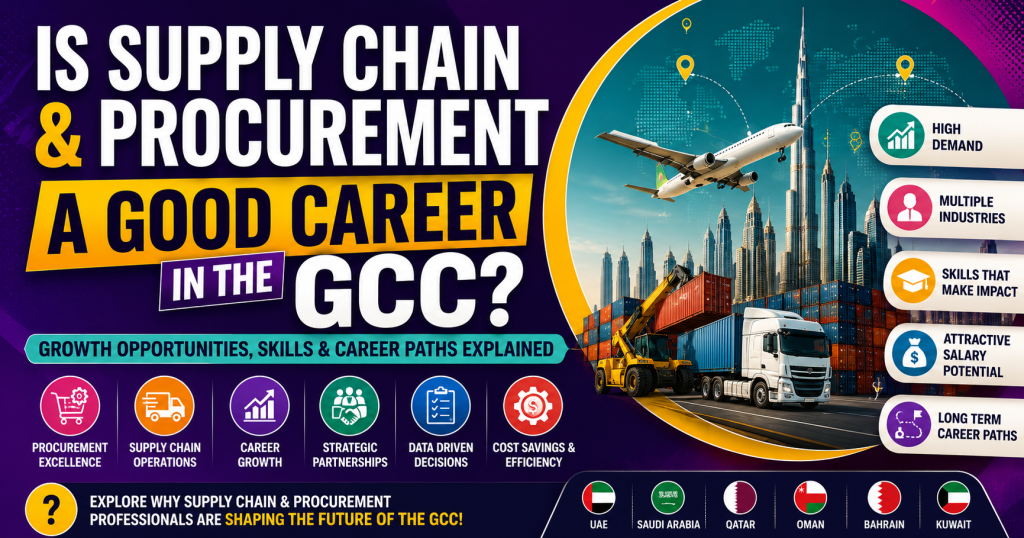
If you’ve been exploring career options in the Gulf region, you’ve likely come across opportunities in supply chain management and procurement. But is supply chain and procurement actually a good long-term career in the GCC?
The short answer is yes. As Gulf economies continue investing in infrastructure, manufacturing, aviation, healthcare, retail, e-commerce, energy, and logistics, organizations need skilled professionals who can manage the movement of goods, negotiate with suppliers, control costs, and ensure business continuity.
Supply chain and procurement professionals play a crucial role behind the scenes. Whether it’s ensuring hospitals receive medical supplies, airlines obtain aircraft components, retailers maintain inventory levels, or construction projects receive materials on time, these professionals help keep industries running efficiently.
This guide explores career growth opportunities, required skills, qualifications, industry demand, and advancement paths for professionals considering a future in supply chain and procurement across the GCC.
Why Are Supply Chain and Procurement Careers Growing in the GCC?
The Gulf region has experienced significant economic diversification over the past decade.
Several factors continue to drive demand for supply chain professionals:
- Expansion of logistics hubs
- Growth in e-commerce
- Large-scale infrastructure projects
- Manufacturing development initiatives
- Aviation sector expansion
- Healthcare investment
- Retail market growth
- Digital transformation of procurement processes
Governments and private sector organizations increasingly recognize supply chain resilience as a strategic priority, creating new opportunities for skilled professionals.
What Is the Difference Between Supply Chain and Procurement?
Although the terms are often used together, they represent different functions.
Procurement
Procurement focuses on acquiring goods and services needed by an organization.
Responsibilities typically include:
- Supplier sourcing
- Vendor evaluation
- Contract negotiation
- Purchase order management
- Cost optimization
- Supplier relationship management
Supply Chain Management
Supply chain management oversees the broader movement of goods from suppliers to end users.
Responsibilities often include:
- Demand planning
- Inventory management
- Logistics coordination
- Transportation management
- Warehousing operations
- Distribution planning
In many GCC organizations, these functions work closely together to support operational efficiency.
Which Industries Hire Supply Chain and Procurement Professionals?
One reason these careers remain attractive is their versatility.
Professionals can work across numerous industries, including:
Aviation
Airlines and airports require procurement and supply chain teams to manage aircraft parts, fuel contracts, equipment, and operational materials.
Oil and Gas
Energy companies rely heavily on procurement specialists to source equipment, services, and materials for large-scale projects.
Healthcare
Hospitals and healthcare providers require reliable supply chains for medical equipment, pharmaceuticals, and consumables.
Construction
Major infrastructure projects depend on procurement professionals to coordinate suppliers and manage material availability.
Retail and E-Commerce
Inventory management, supplier coordination, and distribution planning are critical to customer satisfaction.
Manufacturing
Manufacturers require efficient sourcing and supply chain operations to maintain production schedules.
This wide industry coverage helps create strong career stability.
Entry-Level Career Opportunities
Professionals often begin their careers in positions such as:
Procurement Assistant
Supports purchasing activities, documentation, and supplier communications.
Purchasing Coordinator
Assists with purchase orders, quotations, and vendor management.
Logistics Coordinator
Coordinates transportation, shipments, and inventory movements.
Supply Chain Assistant
Supports inventory planning, reporting, and operational coordination.
Inventory Controller
Maintains stock accuracy and inventory visibility.
These roles provide valuable exposure to procurement and supply chain processes.
Mid-Level Career Growth Opportunities
As professionals gain experience, they often progress into more specialized positions.
Procurement Specialist
Manages sourcing activities and supplier negotiations.
Supply Chain Analyst
Uses data to improve operational performance and efficiency.
Category Buyer
Oversees purchasing activities for specific product categories.
Logistics Supervisor
Leads logistics operations and transportation activities.
Warehouse Manager
Manages inventory, staffing, and warehouse performance.
Professionals at this stage typically develop deeper technical expertise and leadership capabilities.
Senior-Level Career Opportunities
Experienced professionals may advance into strategic leadership positions.
Procurement Manager
Oversees purchasing operations, supplier relationships, and procurement strategies.
Supply Chain Manager
Coordinates planning, inventory, transportation, and operational efficiency initiatives.
Strategic Sourcing Manager
Focuses on long-term supplier partnerships and cost optimization.
Head of Procurement
Leads procurement functions across business units or regions.
Supply Chain Director
Develops and implements organization-wide supply chain strategies.
Chief Supply Chain Officer
Provides executive leadership for supply chain operations.
These positions often involve significant decision-making responsibilities and organizational influence.
Skills Employers Look for in GCC Supply Chain Professionals
Technical Skills
Employers commonly seek candidates with knowledge of:
- Procurement processes
- Inventory management
- Logistics operations
- Demand planning
- ERP systems
- Supplier management
- Contract administration
- Data analysis
Software Skills
Familiarity with platforms such as:
- SAP
- Oracle
- Microsoft Dynamics
- Warehouse Management Systems
- Procurement Platforms
- Advanced Excel
Technology proficiency is becoming increasingly important across the industry.
Soft Skills
Successful professionals often demonstrate:
- Communication
- Negotiation
- Problem solving
- Attention to detail
- Time management
- Leadership
- Relationship building
Strong interpersonal skills can significantly impact career progression.
Qualifications That Can Strengthen Your Career
While educational requirements vary by employer, common qualifications include:
Degrees
- Supply Chain Management
- Logistics Management
- Business Administration
- Industrial Engineering
- Operations Management
- Commerce
Professional Certifications
Globally recognized certifications can enhance credibility.
Popular options include:
- APICS CSCP
- APICS CPIM
- CIPS Certifications
- CPSM
- Lean Six Sigma
- PMP
- Certified Logistics Professional Programs
Candidates with relevant certifications may stand out during recruitment processes.
How Technology Is Changing Supply Chain Careers
The industry is becoming increasingly data-driven.
Organizations are investing in:
- Automation
- Artificial Intelligence
- Predictive Analytics
- Digital Procurement Platforms
- Supply Chain Visibility Tools
- Warehouse Automation
Professionals who understand both operational processes and technology often enjoy stronger career prospects.
Based on current hiring trends across the GCC, employers increasingly value candidates who can analyze data and contribute to digital transformation initiatives.
What Challenges Do Supply Chain Professionals Face?
Like any profession, supply chain careers come with challenges.
Common examples include:
- Supplier disruptions
- Inventory shortages
- Transportation delays
- Cost fluctuations
- Regulatory changes
- Demand forecasting issues
However, solving these challenges is often what makes the profession intellectually rewarding.
Is Supply Chain a Good Career for Fresh Graduates?
Yes.
Many organizations offer graduate and entry-level opportunities that provide structured career development.
Fresh graduates can often begin in:
- Procurement support roles
- Inventory control positions
- Logistics coordination jobs
- Operations analyst positions
The broad range of industries hiring supply chain professionals creates numerous entry points into the profession.
Why Many Professionals Choose Procurement as a Long-Term Career
Procurement offers several attractive benefits:
- Exposure to business strategy
- Supplier relationship management
- Negotiation responsibilities
- Financial decision-making involvement
- Cross-functional collaboration
Professionals who enjoy problem solving, communication, and commercial decision-making often find procurement particularly rewarding.
Frequently Asked Questions
Is supply chain management in demand in the GCC?
Yes. Demand continues to grow as organizations invest in logistics infrastructure, manufacturing, retail, healthcare, aviation, and e-commerce operations.
What qualifications are needed for procurement jobs?
Requirements vary, but degrees in business, supply chain management, logistics, engineering, or related disciplines are commonly preferred.
Can I work in supply chain without experience?
Many entry-level positions are available for graduates and early-career professionals who possess relevant education and transferable skills.
Which industries offer the most opportunities?
Aviation, healthcare, retail, logistics, construction, manufacturing, and oil and gas remain among the largest employers of supply chain professionals.
Are certifications important?
Certifications can strengthen your profile and demonstrate commitment to professional development, particularly for career advancement.
What skills are most valuable?
Communication, negotiation, data analysis, inventory management, supplier relationship management, and technology proficiency are highly valued.
Can procurement lead to leadership roles?
Yes. Many professionals progress from procurement specialist positions into managerial, director-level, and executive leadership roles.
Final Thoughts
So, is supply chain and procurement a good career in the GCC?
For many professionals, the answer is undoubtedly yes. The field offers opportunities across diverse industries, clear career progression pathways, exposure to strategic business decisions, and increasing demand driven by economic growth and technological transformation.
Whether you are a student exploring career options, a recent graduate entering the workforce, or an experienced professional considering a career transition, supply chain and procurement offer a dynamic environment where analytical thinking, communication skills, and operational expertise can lead to long-term professional success.
As organizations continue focusing on efficiency, resilience, and digital transformation, skilled supply chain and procurement professionals are likely to remain among the most sought-after talent in the Gulf region.
⚠️ Disclaimer: Alkareer is an independent job information platform and is not associated with the recruiting company unless explicitly stated. Job details are gathered from publicly available sources and may change without notice. Applicants should verify all information directly through the employer’s official careers page before applying. Alkareer does not charge any fees for job information, applications, interviews, or recruitment services.