Introduction
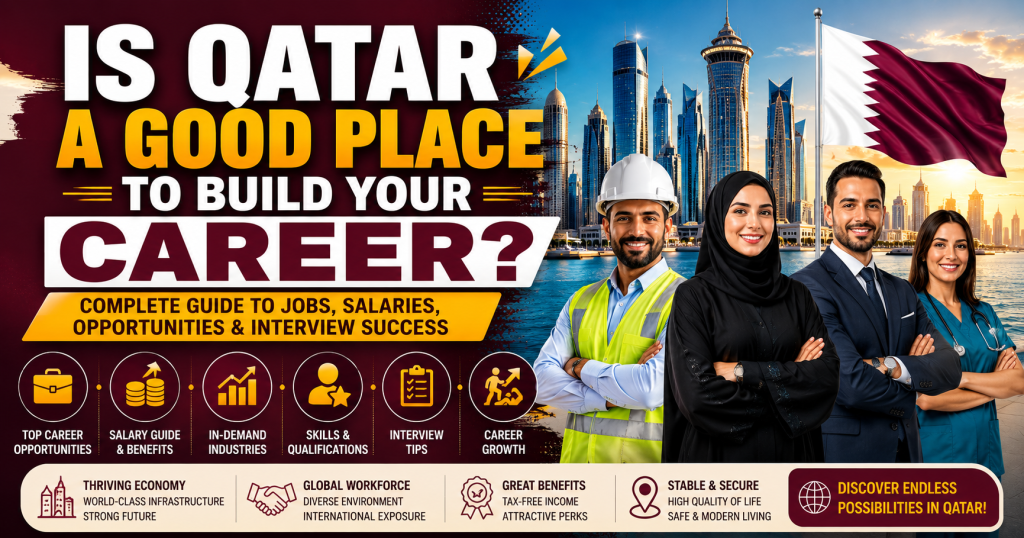
Qatar has emerged as one of the most attractive career destinations in the Gulf region. With its modern infrastructure, expanding economy, world-class aviation sector, energy industry leadership, healthcare investments, and growing private sector, the country continues to attract professionals from around the world.
For many job seekers, one important question remains:
Is Qatar a good place to build a long-term career?
The answer depends on your profession, qualifications, experience, and career goals. However, for many professionals, Qatar offers access to international work environments, tax-free income structures, career development opportunities, and exposure to large-scale projects that may not be available in many other markets.
Whether you are a fresh graduate, skilled technician, healthcare professional, engineer, logistics specialist, aviation employee, or corporate professional, understanding Qatar’s employment landscape can help you make informed career decisions.
This guide explores career opportunities, salary factors, in-demand industries, qualifications employers seek, interview preparation strategies, and practical advice for building a successful career in Qatar.
Why Do So Many Professionals Choose Qatar for Their Careers?
Over the past two decades, Qatar has transformed into one of the Middle East’s most dynamic economies.
Several factors continue to attract international talent:
- Strong economic development
- Large infrastructure investments
- Expanding transportation sector
- Growing healthcare industry
- Aviation and airport expansion
- Energy sector opportunities
- Modern business environment
- International workforce exposure
Professionals often view Qatar as a destination that combines career growth opportunities with a high standard of living.
What Makes Qatar’s Job Market Unique?
Unlike many countries where employment opportunities are concentrated in a few industries, Qatar offers career options across multiple sectors.
Key employment drivers include:
Energy and Natural Resources
Qatar remains one of the world’s leading energy producers.
Opportunities exist in:
- Engineering
- Operations
- Maintenance
- Procurement
- Project Management
- Health and Safety
Aviation and Transportation
The country has built a globally recognized aviation ecosystem centered around major airline and airport operations.
Popular career paths include:
- Airport Operations
- Aviation Logistics
- Engineering
- Customer Service
- Cargo Operations
- Technical Services
Construction and Infrastructure
Major projects continue creating demand for:
- Civil Engineers
- Quantity Surveyors
- Project Managers
- Procurement Specialists
- HSE Professionals
Healthcare
Healthcare expansion supports demand for:
- Doctors
- Nurses
- Pharmacists
- Laboratory Specialists
- Healthcare Administrators
Information Technology
Digital transformation initiatives have increased demand for:
- Cybersecurity Specialists
- Software Developers
- Data Analysts
- Cloud Engineers
- IT Support Professionals
Which Careers Are Most In Demand in Qatar?
Employer demand changes over time, but several professions consistently remain important.
Engineering Careers
Engineers continue to play a vital role in infrastructure, energy, manufacturing, and construction sectors.
Popular specializations include:
- Mechanical Engineering
- Electrical Engineering
- Civil Engineering
- Instrumentation Engineering
- Process Engineering
Aviation Careers
The aviation sector offers opportunities in:
- Airline Operations
- Aircraft Maintenance
- Airport Operations
- Cargo Services
- Procurement
- Logistics
Healthcare Careers
Healthcare remains one of the most stable employment sectors.
Common opportunities include:
- Registered Nurses
- Physicians
- Allied Health Professionals
- Healthcare Technicians
Supply Chain and Procurement Careers
Organizations increasingly focus on operational efficiency and supply chain resilience.
Demand continues for:
- Procurement Officers
- Supply Chain Specialists
- Logistics Coordinators
- Inventory Controllers
Finance and Accounting Careers
Businesses require professionals who can support compliance and financial management.
Common roles include:
- Accountants
- Auditors
- Financial Analysts
- Finance Managers
What Skills Do Employers in Qatar Look For?
While technical qualifications remain important, employers increasingly evaluate candidates based on a combination of hard and soft skills.
Technical Skills
Requirements vary by profession but may include:
- Industry certifications
- ERP software knowledge
- Project management tools
- Technical troubleshooting abilities
- Data analysis capabilities
Soft Skills
Employers frequently prioritize:
- Communication
- Teamwork
- Problem solving
- Adaptability
- Leadership
- Time management
Professional Attributes
Highly valued traits include:
- Reliability
- Professionalism
- Accountability
- Continuous learning
- Cultural awareness
Professionals who combine technical expertise with strong interpersonal skills often enjoy better career progression opportunities.
How Much Can You Earn in Qatar?
One of the most searched questions among job seekers is:
“Are salaries in Qatar good?”
Compensation depends on several factors, including:
- Industry
- Experience level
- Qualifications
- Employer
- Job responsibilities
- Professional certifications
Rather than focusing solely on salary figures, candidates should evaluate the overall compensation package.
Benefits may include:
- Housing allowance
- Transportation allowance
- Medical insurance
- Annual leave
- Air tickets
- End-of-service benefits
- Professional development opportunities
Highly specialized professionals often command stronger compensation packages than entry-level employees.
Is Qatar a Good Destination for Fresh Graduates?
Yes, although competition can be strong.
Fresh graduates may find opportunities in:
- Graduate development programs
- Administrative roles
- Customer service positions
- Operations support functions
- Entry-level technical positions
- Trainee programs
Graduates who demonstrate strong communication skills, internships, certifications, and practical project experience may improve their employability.
How Can Professionals Advance Their Careers in Qatar?
Career growth typically depends on a combination of performance, qualifications, and professional development.
Step 1: Build Industry Expertise
Employers value professionals who develop specialized knowledge within their field.
Step 2: Pursue Relevant Certifications
Professional certifications can strengthen credibility and competitiveness.
Examples include:
- PMP
- NEBOSH
- CIPS
- APICS
- Cisco Certifications
- Microsoft Certifications
Step 3: Develop Leadership Skills
As professionals progress into senior positions, leadership capabilities become increasingly important.
Step 4: Stay Updated on Industry Trends
Continuous learning helps professionals remain competitive in evolving industries.
What Is the Work Culture Like in Qatar?
Qatar’s workforce is highly international.
Professionals often work alongside colleagues from numerous countries and cultural backgrounds.
Common workplace characteristics include:
- Professional environments
- Structured reporting systems
- Performance-focused cultures
- Emphasis on teamwork
- Respect for diversity
Understanding workplace etiquette and maintaining professionalism can contribute significantly to long-term career success.
How Should You Prepare for a Job Interview in Qatar?
Interview preparation remains one of the most important factors influencing hiring outcomes.
Research the Employer
Before attending an interview:
- Review the company website
- Understand services and operations
- Learn about recent developments
- Understand the job requirements
Prepare for Technical Questions
Candidates should review:
- Industry knowledge
- Technical competencies
- Professional achievements
- Project experience
Practice Behavioral Questions
Employers often ask questions such as:
- Tell us about yourself.
- Describe a challenge you faced at work.
- How do you manage deadlines?
- Why do you want to work in Qatar?
- Why should we hire you?
Demonstrate Professionalism
Strong first impressions matter.
Focus on:
- Professional communication
- Confidence
- Punctuality
- Clear answers
- Positive attitude
Common Mistakes Job Seekers Should Avoid
Many candidates reduce their chances by making avoidable mistakes.
Examples include:
Applying Without Customizing Their Resume
Tailor your resume to match the position.
Ignoring ATS Optimization
Use relevant industry keywords naturally.
Lack of Interview Preparation
Researching the employer remains essential.
Overlooking Professional Development
Continuous learning helps maintain competitiveness.
Frequently Asked Questions
Is Qatar a good country for career growth?
Yes. Qatar offers opportunities across multiple industries, particularly for professionals who possess in-demand skills and relevant qualifications.
Which industries offer the most opportunities?
Energy, healthcare, aviation, construction, logistics, information technology, and finance remain among the strongest employment sectors.
Are salaries in Qatar tax-free?
Employment regulations and taxation policies may vary depending on individual circumstances and nationality. Candidates should verify current regulations through official sources.
Can fresh graduates find jobs in Qatar?
Yes. Graduate programs, trainee positions, and entry-level roles exist across several industries, although competition may be significant.
What qualifications improve employability in Qatar?
Industry certifications, relevant degrees, technical expertise, language skills, and practical experience often improve employment prospects.
How important is English in Qatar?
English is widely used in business environments and is often required for many professional positions.
Is Qatar suitable for long-term career development?
Many professionals build successful long-term careers in Qatar due to the country’s economic stability, infrastructure development, and international business environment.
Final Thoughts
So, is Qatar a good place to build your career?
For many professionals, the answer is yes. Qatar offers opportunities across diverse industries, exposure to international work environments, access to large-scale projects, and pathways for long-term professional growth.
Success, however, depends on more than simply securing a job. Professionals who invest in continuous learning, develop strong technical and interpersonal skills, maintain professionalism, and stay informed about industry trends often position themselves for sustainable career growth.
Whether you are exploring your first overseas opportunity or planning the next stage of your professional journey, Qatar remains one of the Gulf region’s most attractive destinations for ambitious job seekers seeking career advancement and professional development.