For many job seekers, especially from India and other South Asian countries, working in Gulf nations such as the UAE, Saudi Arabia, Qatar, Oman, Bahrain, and Kuwait is a major career goal. The reasons are clear—tax-free salaries, better job exposure, and opportunities for long-term financial stability. However, one of the biggest challenges candidates face is not understanding how the Gulf hiring process actually works.
Many applicants assume that getting a Gulf job is simply about applying and receiving an offer. In reality, the process is structured, competitive, and involves multiple stages—from application to visa stamping. If you don’t understand each step properly, you may face delays, rejection, or even fall into scams.
This complete 2026 guide explains the Gulf job hiring process step-by-step in a simple and practical way so that you can approach your job search with clarity and confidence.
Understanding the Gulf Job Market in 2026



Before diving into the process, it is important to understand how the Gulf job market works today. In 2026, hiring has become more digital, faster, and more competitive. Companies are focusing on skilled candidates who can join quickly and adapt to multicultural environments.
Key trends in the Gulf job market include:
- Increased use of online job portals and LinkedIn
- Preference for candidates already in the Gulf
- Higher demand for certified professionals
- Faster hiring cycles compared to previous years
Understanding these trends will help you align your job search strategy with current market expectations.
Step 1: Identifying the Right Job Opportunities
The first and most crucial step is finding the right job opportunities. Many candidates make the mistake of applying randomly to every job they see, which reduces their chances of success.
Instead, focus on targeted job search methods such as:
- Applying through trusted job portals
- Visiting official company websites
- Networking through professional platforms
- Contacting verified recruitment agencies
When selecting jobs, ensure that your skills, experience, and qualifications match at least 70–80% of the requirements. This increases your chances of getting shortlisted.
Step 2: Preparing a Gulf-Standard CV
Your CV is your entry ticket to the Gulf job market. Recruiters often spend only a few seconds reviewing each CV, so it must be clear, relevant, and professional.
A strong Gulf-standard CV should include:
- A clear profile summary
- Relevant work experience
- Industry-specific skills
- Certifications and licenses
- Contact details and location
Avoid unnecessary details and focus only on what is relevant to the job. Keep the format simple and easy to read, and ideally limit your CV to one or two pages.
Step 3: Submitting Your Application



Once your CV is ready, the next step is submitting your application. This can be done through job portals, company websites, or email.
Important tips while applying:
- Customize your CV for each job
- Use a professional email address
- Write a short and relevant cover message
- Apply only to suitable roles
Many companies use Applicant Tracking Systems (ATS) to filter applications, so make sure your CV includes relevant keywords from the job description.
Step 4: Initial Screening and Shortlisting
After submitting your application, recruiters begin the screening process. This is where many applications are rejected.
Recruiters evaluate:
- Relevance of your experience
- Matching skills and qualifications
- Clarity and presentation of your CV
If your profile matches the job requirements, you will be shortlisted for the next stage. This stage may take anywhere from a few days to a few weeks depending on the company.
Step 5: Interview Process

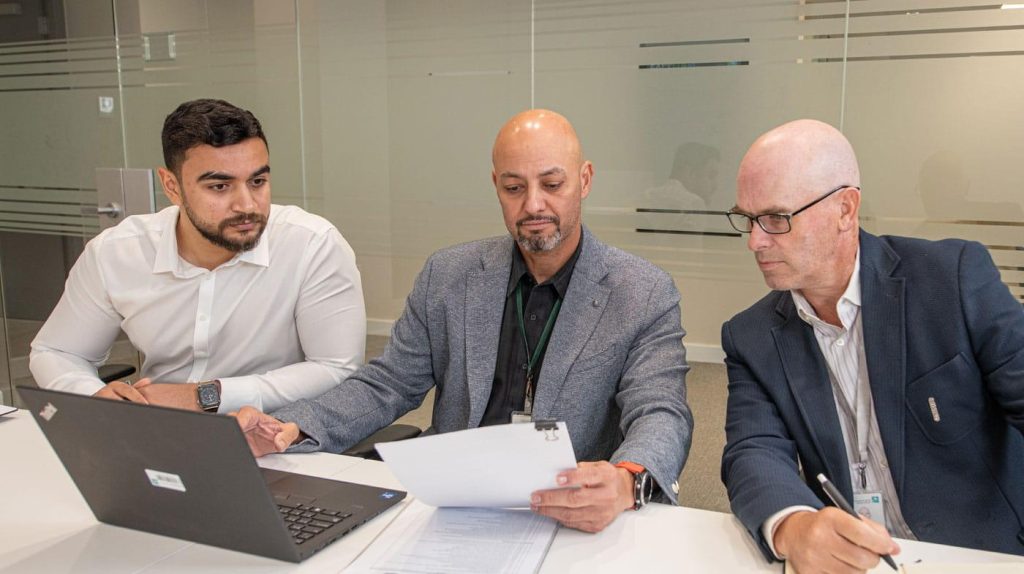
The interview stage is one of the most important parts of the hiring process. Depending on the job role, there may be one or multiple rounds of interviews.
Common types of interviews include:
- HR interview
- Technical interview
- Managerial or final interview
Interviews may be conducted:
- Online (Zoom, Teams, Google Meet)
- Telephone
- In-person (if you are already in the Gulf)
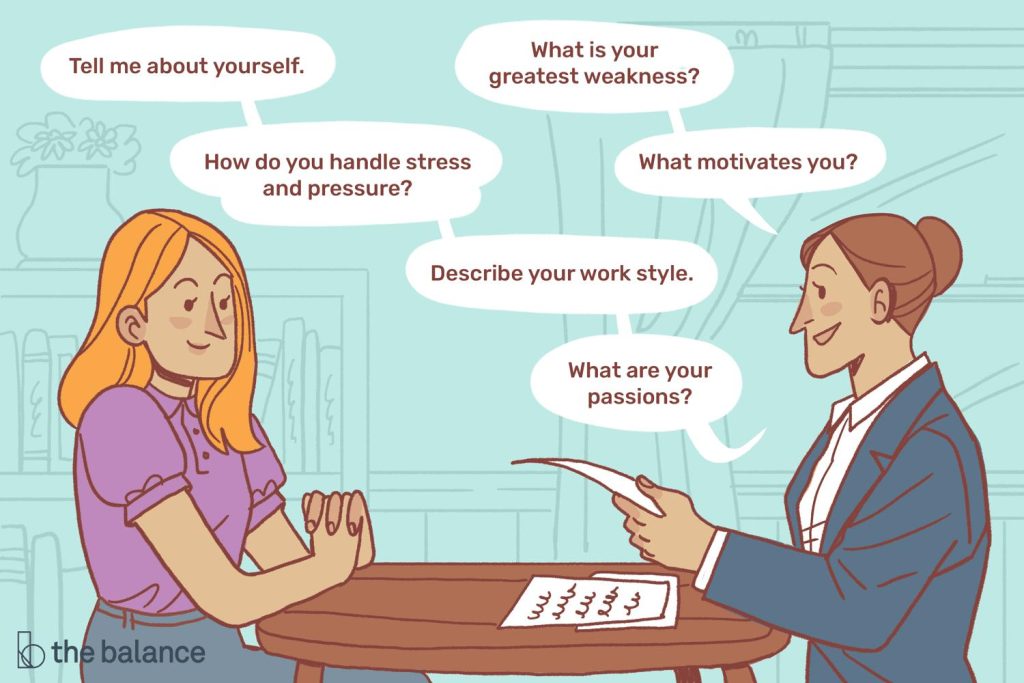
To succeed in interviews:
- Research the company
- Understand the job role
- Prepare answers for common questions
- Be confident and clear in communication
Step 6: Job Offer and Salary Negotiation
Once you successfully clear the interview, the company will issue a job offer. This may initially be a verbal offer followed by a written offer letter.
The offer letter typically includes:
- Job position
- Salary details
- Benefits (accommodation, transport, etc.)
- Working hours
- Contract terms
Before accepting the offer, carefully review all details. If needed, you can negotiate salary and benefits based on your experience and market standards.
Step 7: Document Submission and Verification
Once you successfully clear the interview, the company will issue a job offer. This may initially be a verbal offer followed by a written offer letter.
The offer letter typically includes:
- Job position
- Salary details
- Benefits (accommodation, transport, etc.)
- Working hours
- Contract terms
Before accepting the offer, carefully review all details. If needed, you can negotiate salary and benefits based on your experience and market standards.
Step 8: Medical Test and Background Checks
Most Gulf countries require candidates to undergo a medical test before issuing a work visa. This ensures that the candidate is fit for employment.
Medical tests usually include:
- Blood test
- Chest X-ray
- General health check
Some companies may also conduct background verification to confirm your employment history and credentials.
Step 9: Visa Processing and Approval
Once your documents and medical tests are cleared, the company will initiate the visa process. This is handled either by the employer or an authorized agency.
The visa process involves:
- Work permit approval
- Entry visa issuance
- Immigration clearance
The time required for visa processing may vary from a few days to several weeks depending on the country and job role.
Step 10: Travel and Arrival in the Gulf
After receiving your visa, you can travel to the Gulf country. The employer may arrange your flight ticket or reimburse the cost depending on the contract.
Upon arrival:
- You will go through immigration
- Your employer or representative may receive you
- Temporary accommodation may be provided
This marks the beginning of your new job journey.
Step 11: Residence Visa and ID Processing
After arrival, your employer will process your residence visa and ID (such as Emirates ID in the UAE).
This process includes:
- Medical test (local)
- Biometric registration
- Visa stamping
Once completed, you become a legal resident and can officially start working.
Step 12: Joining and Probation Period
The final step is joining your job and starting your work. Most companies have a probation period, usually ranging from 3 to 6 months.
During this period:
- Your performance is evaluated
- You adapt to the work environment
- The company assesses your suitability
Successfully completing the probation period confirms your permanent employment.
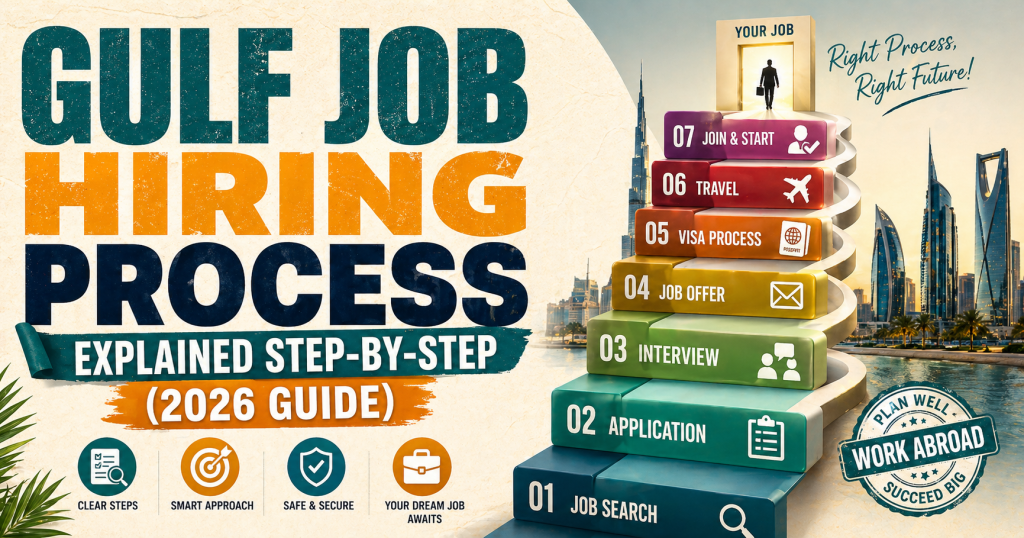
Complete Hiring Process Flow (Simple Diagram)
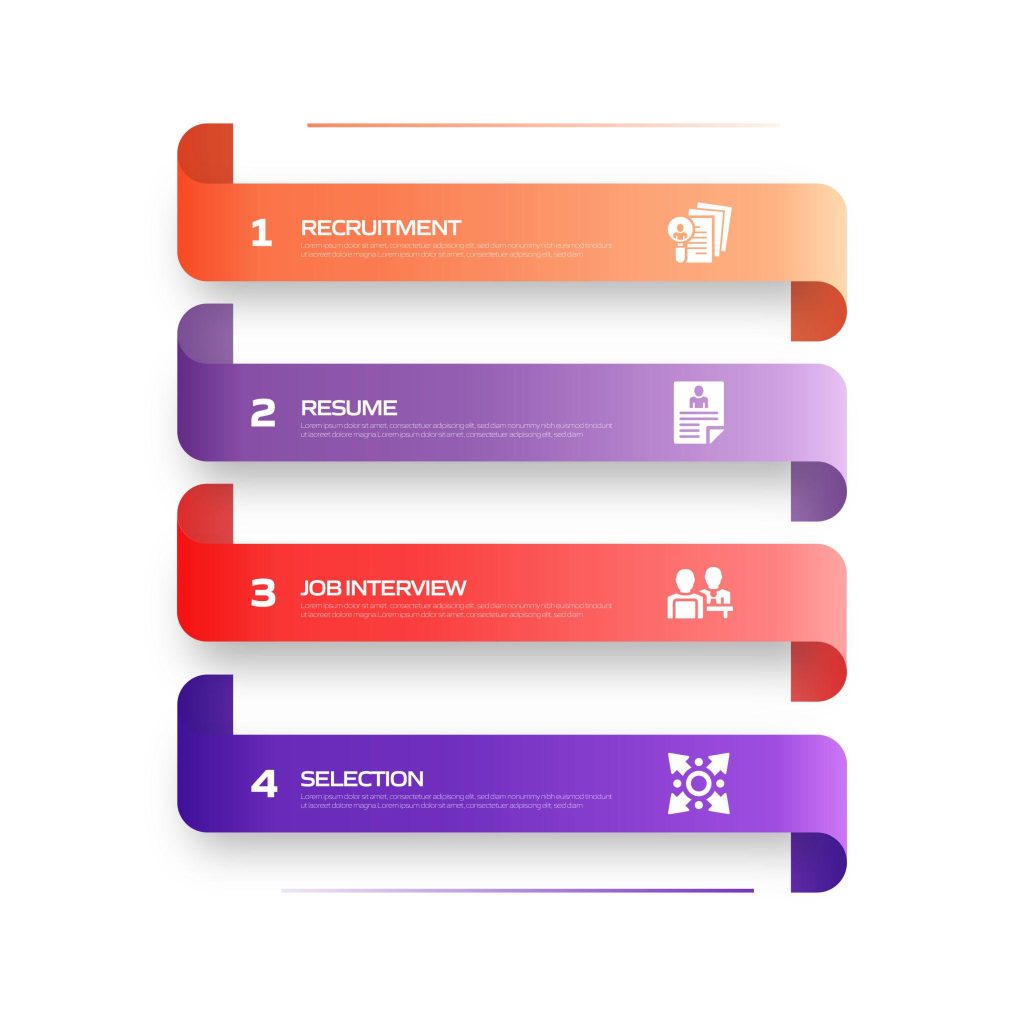
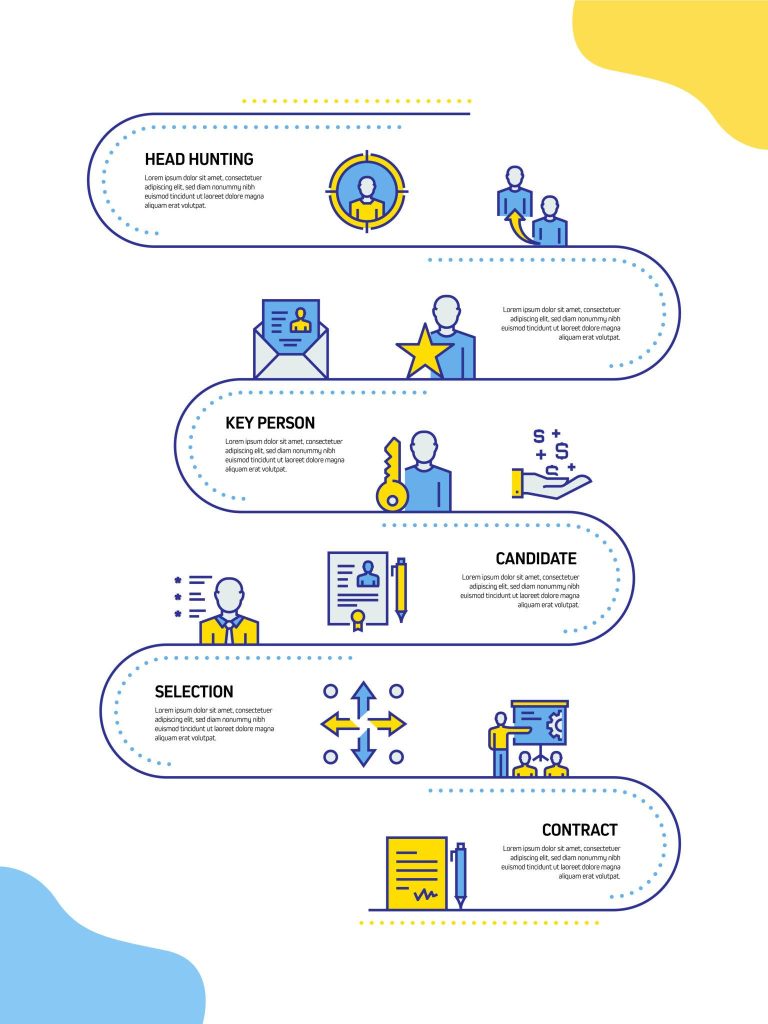
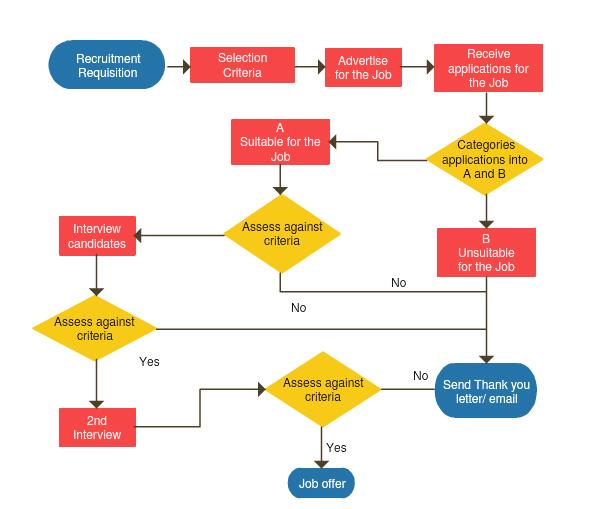
To simplify, here is the complete Gulf hiring process in order:
- Job Search
- CV Preparation
- Application Submission
- Shortlisting
- Interview
- Job Offer
- Document Submission
- Medical Test
- Visa Processing
- Travel
- Residence Visa
- Job Joining
Understanding this flow will help you stay prepared at each stage.
Common Mistakes to Avoid During the Hiring Process
Many candidates lose opportunities due to avoidable mistakes. Being aware of these can improve your chances significantly.
Common mistakes include:
- Applying without meeting requirements
- Sending generic CVs
- Ignoring interview preparation
- Accepting offers without verification
- Paying money to fake recruiters
Avoiding these mistakes will make your job search smoother and safer.
Tips to Speed Up Your Gulf Job Process
If you want to get hired faster, you need to be proactive and prepared.
Effective tips include:
- Keep your documents ready
- Get relevant certifications
- Stay active on job portals
- Respond quickly to recruiter messages
- Be flexible with job roles and locations
Speed and preparedness can give you a strong advantage over other candidates.
Summary
The Gulf job hiring process may seem complicated at first, but once you understand each step, it becomes much easier to navigate. The key is to be prepared, stay informed, and avoid common mistakes.
In 2026, competition is higher, but opportunities are also growing. Candidates who approach the process strategically and professionally have a much higher chance of success.
Instead of rushing or applying blindly, take time to build a strong profile, apply to the right jobs, and follow each step carefully. When you combine the right skills with the right approach, securing a Gulf job becomes not just possible, but achievable.
This step-by-step guide is designed to help you move forward with confidence and clarity in your Gulf job journey.