
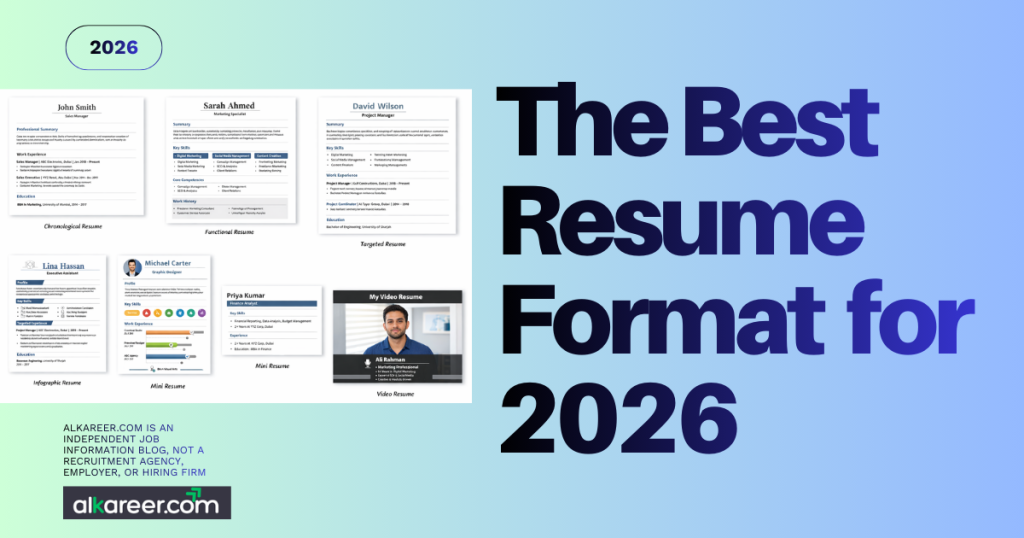
In 2026, creating a resume is no longer just about listing your education and experience. Recruiters today receive hundreds or even thousands of applications for a single vacancy, and they spend only a few seconds scanning each resume. This is why choosing the right resume format has become extremely important. A well-chosen resume format helps recruiters understand your profile quickly, highlights your strengths, and improves your chances of getting shortlisted.
Many job seekers struggle not because they lack skills or experience, but because their resume format does not match their career level or the job they are applying for. In this detailed guide, we will explain all major resume formats used in 2026, including traditional and modern types, and help you understand their advantages and limitations in a simple and practical way.
Why Choosing the Right Resume Format Matters in 2026
The resume format you choose directly affects how your information is presented and understood. Modern recruitment relies heavily on Applicant Tracking Systems, especially in large companies and GCC countries. These systems scan resumes for structure, keywords, and clarity before a human recruiter even sees them. If your resume format is confusing or incompatible, it may get rejected automatically.
A good resume format makes your profile easy to read, professional, and relevant. At the same time, a poor format can hide your strengths or highlight your weaknesses, such as employment gaps or frequent job changes. This is why understanding different resume formats is the first step toward building a strong resume.
Chronological Resume Format
The chronological resume format is the most commonly used and widely accepted format across industries. In this format, your work experience is listed in reverse chronological order, starting with your most recent job and moving backward. Recruiters prefer this format because it allows them to quickly see your career progression, job stability, and growth over time.
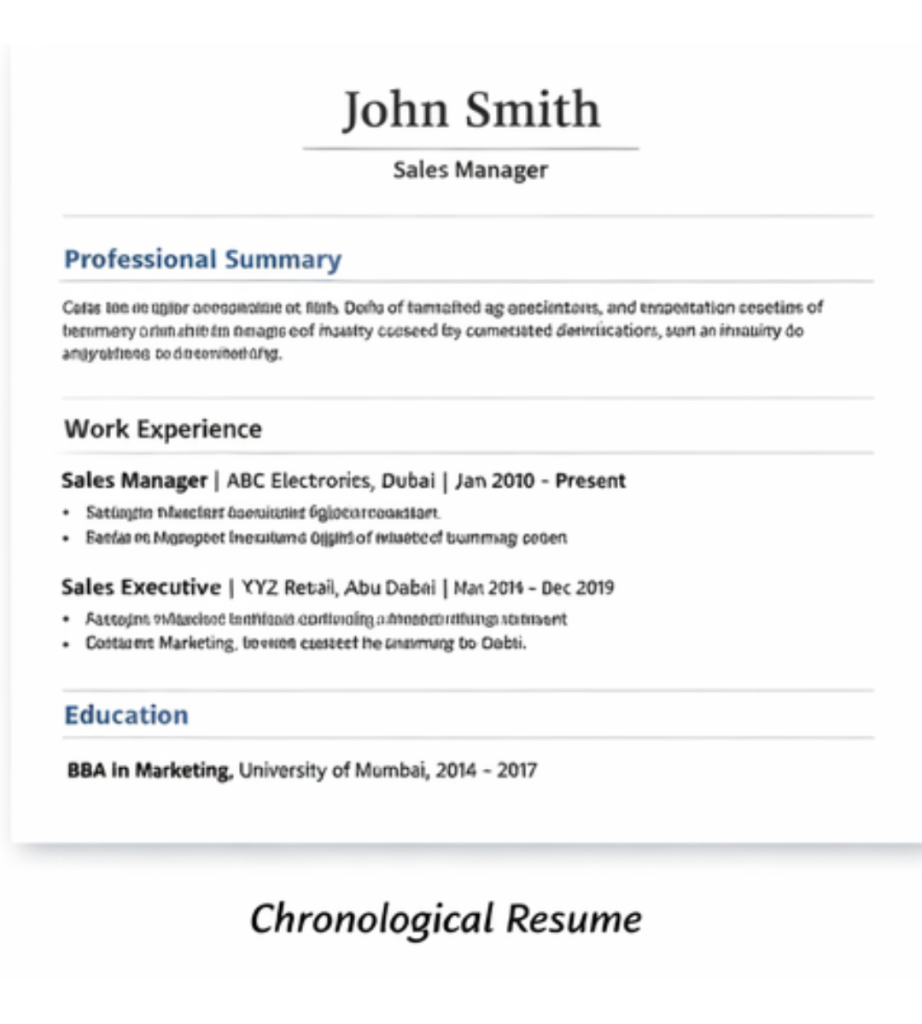
This resume format works particularly well for experienced professionals, candidates with a stable career history, and job seekers applying for corporate, government, or GCC-based roles. Since recruiters are already familiar with this structure, it creates a sense of trust and professionalism.
However, the chronological resume also has its limitations. Because it focuses heavily on work history, any career gaps or frequent job changes become very visible. This format is also not ideal for freshers or career changers, as it does not highlight skills as strongly as experience. Despite these drawbacks, the chronological resume remains the safest and most recruiter-friendly option in 2026.
Functional Resume Format
The functional resume format is designed to focus on skills and abilities rather than job history. Instead of listing work experience first, this format highlights core competencies, technical skills, and strengths at the top of the resume. Work experience is mentioned briefly, usually toward the end.
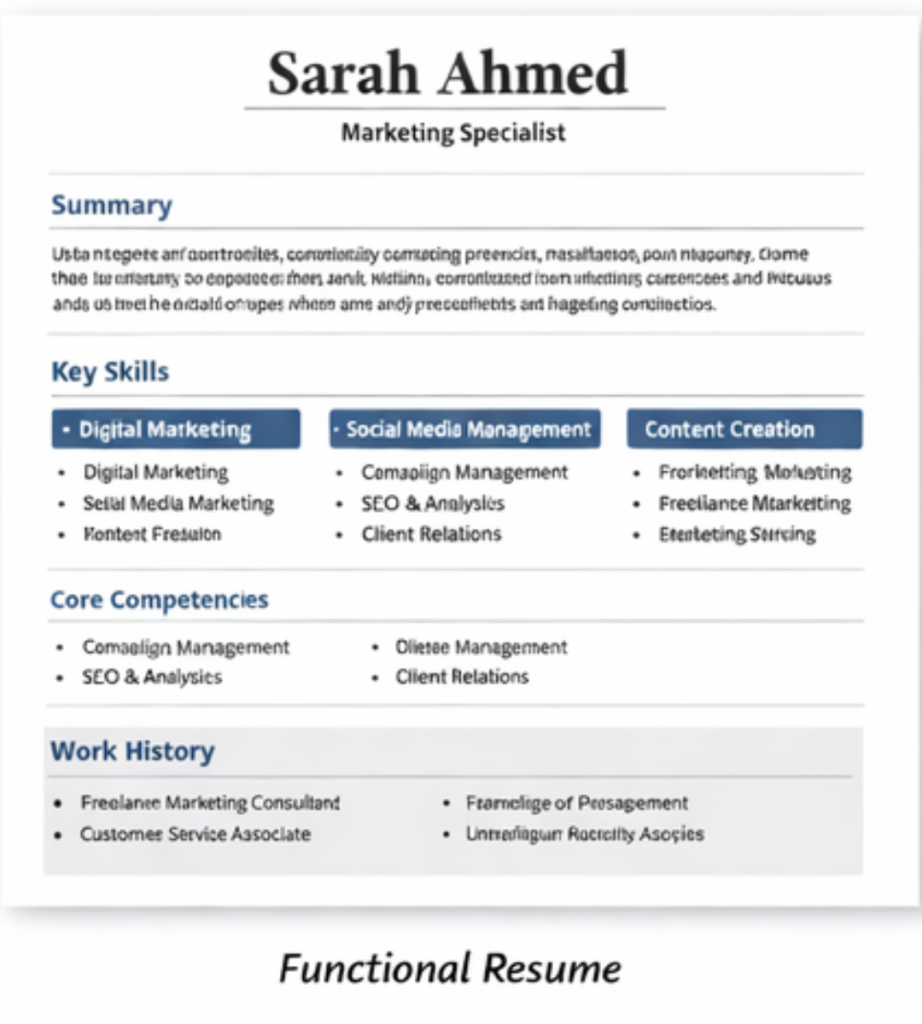
This format is especially useful for freshers, candidates returning to work after a break, or individuals changing careers. It allows job seekers to showcase transferable skills and reduce attention on limited or unrelated work experience. For someone who has strong skills but lacks formal job history, this format can be very helpful.
At the same time, many recruiters are cautious about functional resumes. Since work history is not clearly displayed, some recruiters may feel the candidate is hiding something. Functional resumes are also less compatible with ATS software, which prefers clearly defined job titles and timelines. Because of this, functional resumes are less popular in GCC countries and traditional corporate environments.
Combination Resume Format
The combination resume format, also known as a hybrid resume, combines elements of both chronological and functional formats. It starts by highlighting key skills and achievements, followed by a detailed work experience section listed in reverse chronological order. This balanced approach allows candidates to showcase both what they can do and where they have worked.
This format is ideal for mid-level professionals, technical specialists, and candidates with diverse experience. It is particularly useful when you want to highlight specific skills without hiding your employment history. Recruiters appreciate this format because it provides a complete picture of the candidate.
However, the combination resume requires careful structuring. If not properly formatted, it can become lengthy or repetitive. It also takes more effort to customize compared to a simple chronological resume. Despite this, the combination resume is one of the most flexible and effective resume formats for 2026.
Targeted Resume Format
A targeted resume is not a separate structure but a customized version of any resume format designed for a specific job role. In a targeted resume, every section—from the summary to skills and experience—is tailored to match the job description. Keywords, responsibilities, and achievements are carefully aligned with the employer’s requirements.
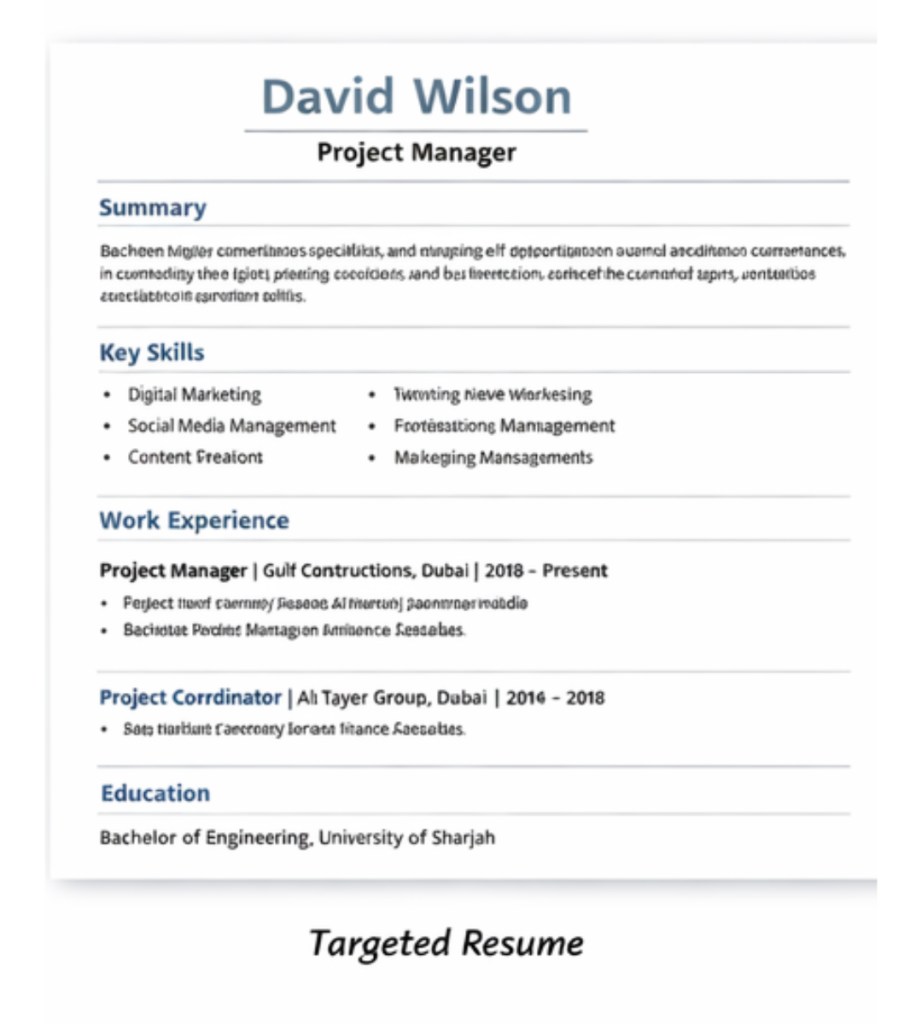
This type of resume significantly increases the chances of getting shortlisted, especially for competitive roles and ATS-based hiring systems. Recruiters can immediately see that the candidate is a strong match for the position. Targeted resumes are highly effective for international and senior-level job applications.
The main challenge with targeted resumes is the effort involved. Each application requires customization, which can be time-consuming. However, the higher response rate often makes this effort worthwhile, especially in a competitive job market.
Infographic Resume Format
An infographic resume uses visual elements such as icons, charts, timelines, and colors to present information creatively. This format is designed to grab attention and showcase creativity, making it popular among designers, marketers, and creative professionals.
While infographic resumes can leave a strong visual impression, they are not suitable for all industries. ATS software often cannot read graphic-heavy resumes, and many corporate recruiters prefer simple, text-based formats. In conservative job markets such as the GCC, infographic resumes may be seen as unprofessional.
This format works best when used alongside a traditional resume rather than as a replacement. It is most effective in creative roles where visual presentation is part of the job requirement.
Mini Resume Format
A mini resume is a short and concise version of your main resume. It typically includes your name, job title, key skills, and a brief summary. Mini resumes are often used for networking events, career fairs, or online professional profiles.
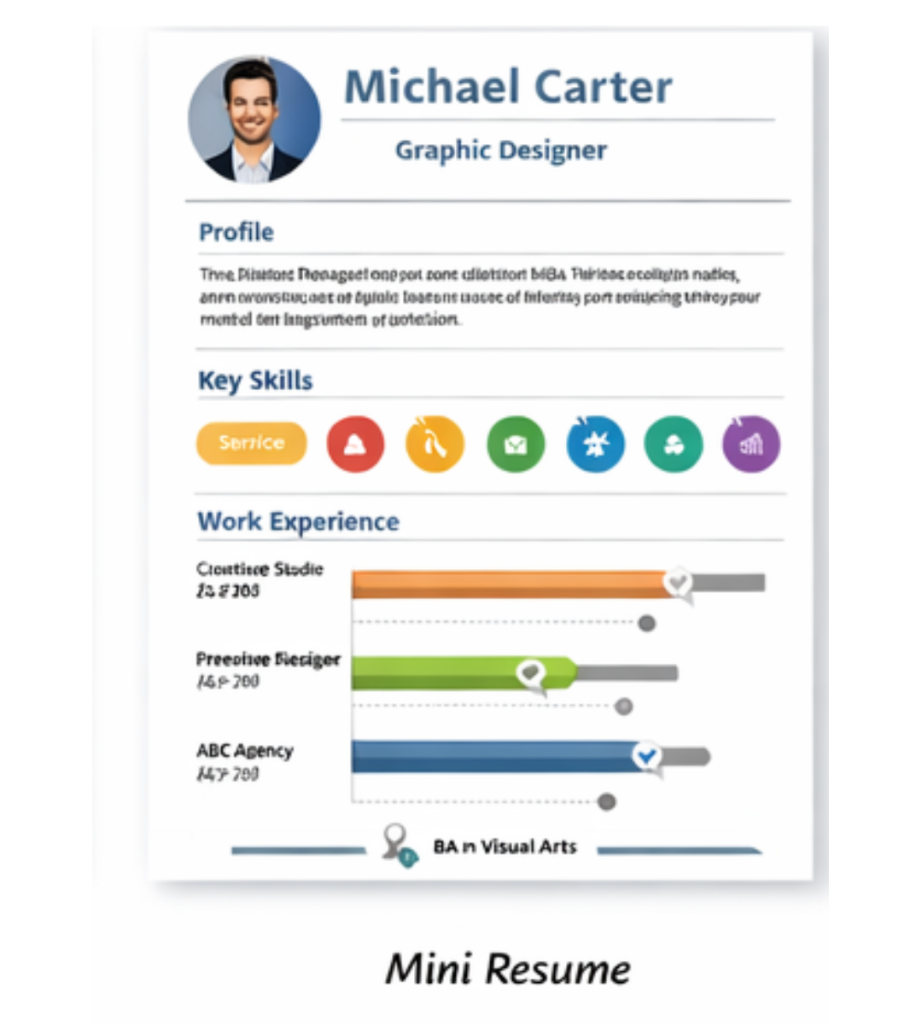
The advantage of a mini resume is its simplicity and ease of sharing. It provides a quick overview of your profile and helps create initial interest. However, it cannot replace a full resume, as it lacks detailed information about experience and achievements. Mini resumes are best used as a supporting tool rather than a primary job application document.
Video Resume Format
A video resume is a short recorded video where candidates introduce themselves, talk about their skills, experience, and career goals. This format allows job seekers to showcase communication skills, confidence, and personality, which are difficult to convey through a traditional resume.
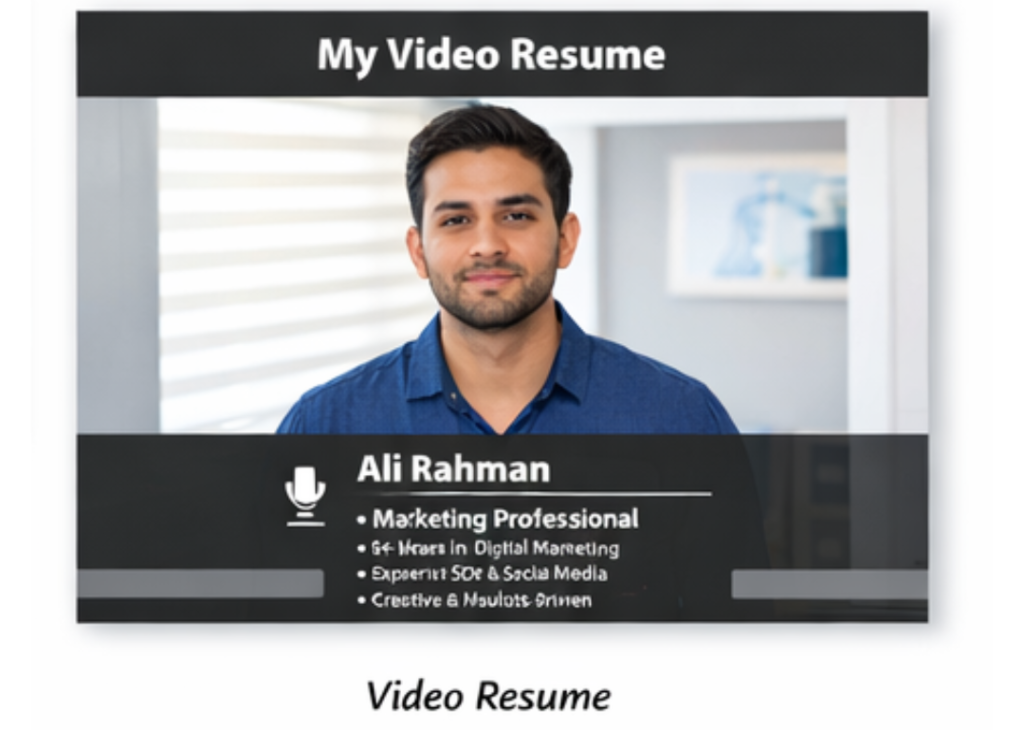
Video resumes can be very effective for roles in media, sales, marketing, and content creation. They help candidates stand out and create a strong personal connection. However, video resumes are not ATS-compatible and are not widely accepted in formal industries or GCC job markets. Cultural preferences and technical requirements can also limit their usage.
Because of these reasons, video resumes should be used selectively and only when the employer encourages or allows them.
Choosing the Best Resume Format for Your Career
The best resume format depends on your experience level, industry, and job location. Freshers may benefit from functional or combination formats, while experienced professionals should generally use chronological or targeted resumes. Job seekers applying in UAE and GCC countries are advised to stick to chronological or combination formats for better acceptance.
Understanding resume formats helps you present your profile in the best possible way. A well-structured resume not only improves your chances of selection but also reflects your professionalism and attention to detail.
| Disclaimer: Alkareer.com is an independent job information blog and not a recruitment agency. We never charge any fees for job listings. |